The Step by Step Trap

Have you ever finished a tutorial and then felt completely lost?
The class was amazing. The colors were beautiful. The steps were easy. And honestly? This may be the best you’ve ever colored!
But now staring at your next coloring project, all that confidence is gone.
What happened?
This is the problem with “how to color a _____” lessons.
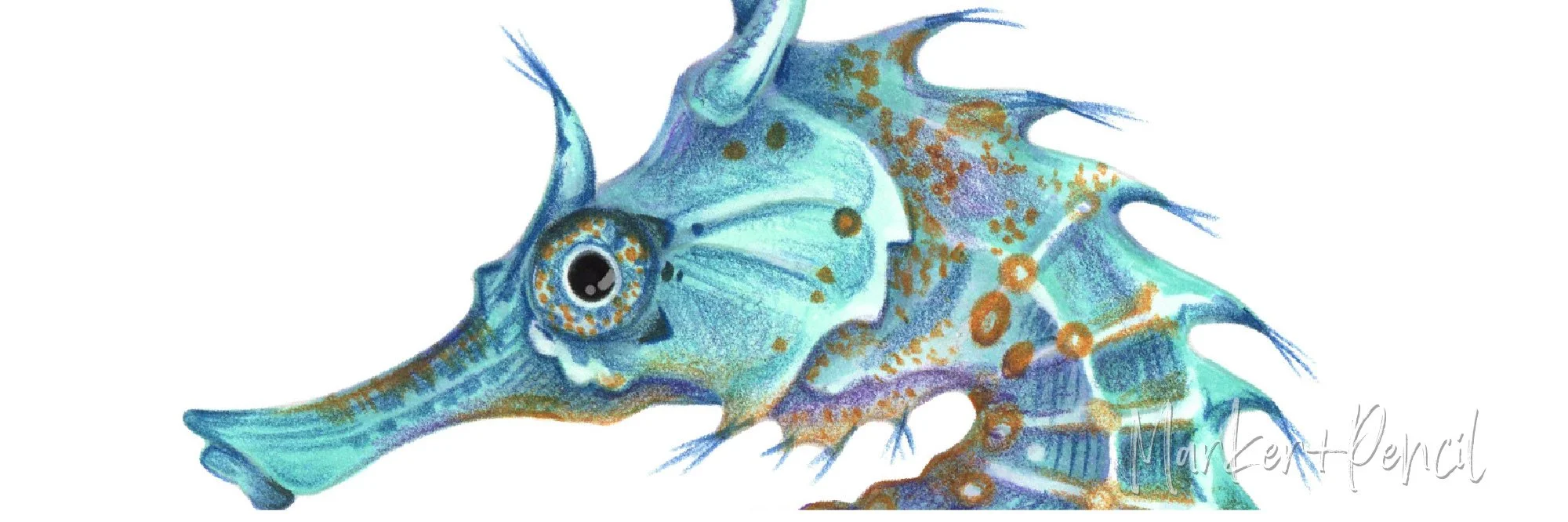
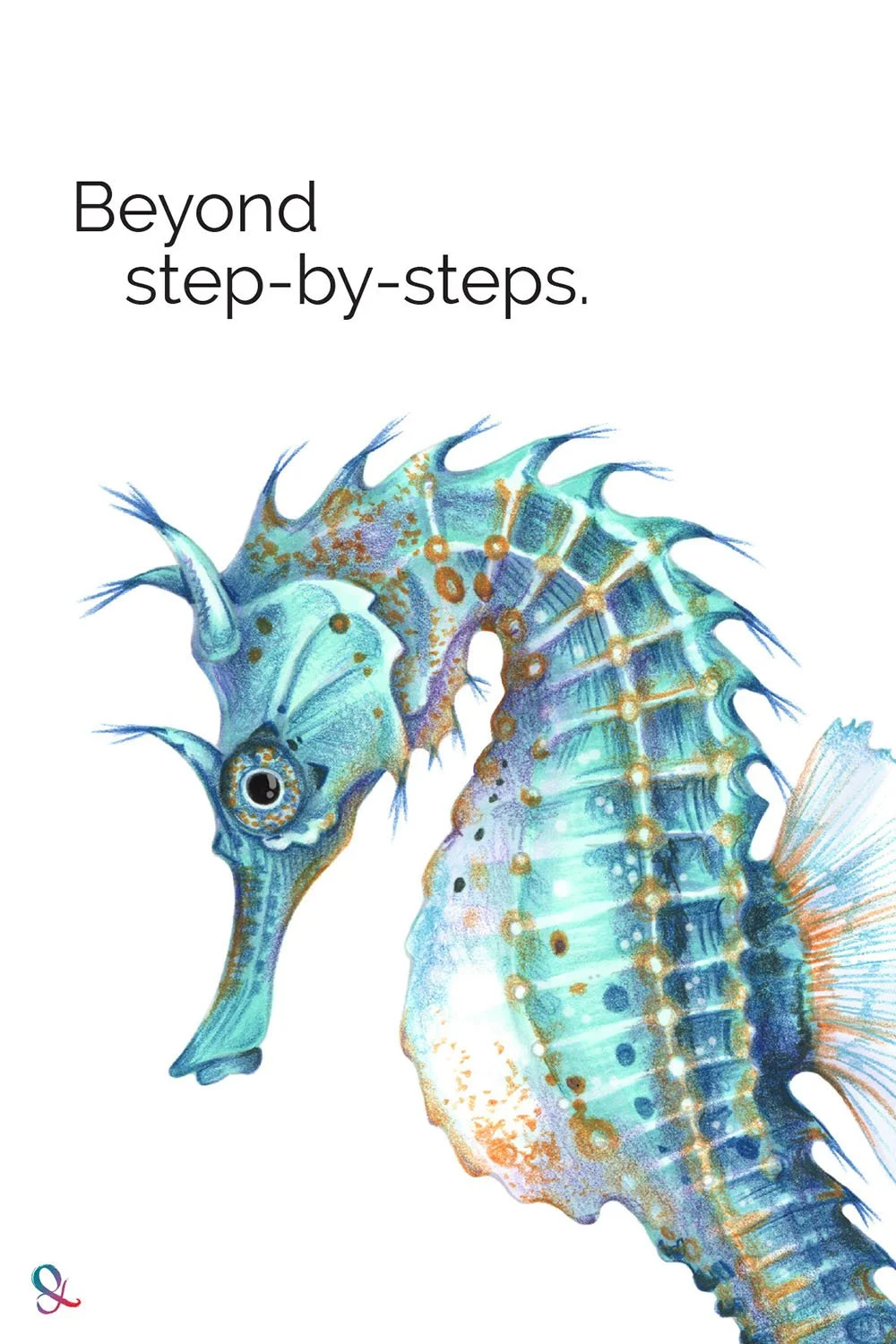
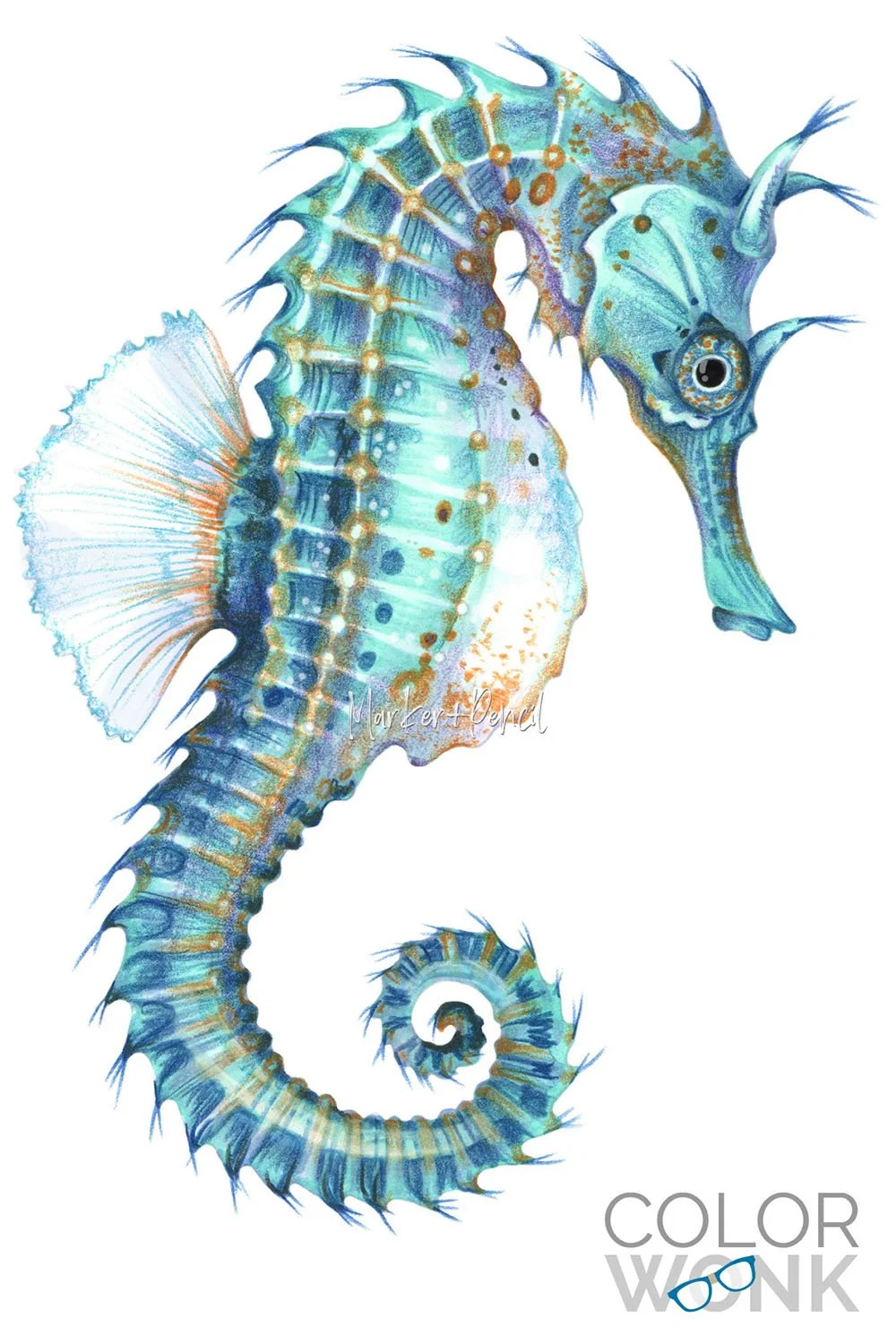
Sure, you colored an awesome elephant, flower, mushroom, disco ball, or the most fantabulous seahorse ever.
But you can’t color sea horses forever.
How-to tutorials feel educational because you’re busy, focused, and making visible progress.
But ultimately, the lesson ends when the page ends.
The subject is temporary. The skill should travel.
Otherwise, every new project feels like starting over from the very beginning.
You’re not feeling lost because you forgot the steps. You’re lost because the steps only apply to that one project.
Art school does not offer Elephants 101. There’s no Roses 204 or Advanced Disco Ball Sparkles. In four years of art school, nobody ever gave me a “how to draw a _____” lesson.
The closest we came was “how to mix a warm black” or “how to use a proportional divider.” Tools, concepts, methods, observation. Not one separate class for every object under the sun.
The point is to color anything for a lifetime, not a lifetime of elephants.

The subject Is not the lesson
You probably signed up for the seahorse class to color a pretty seahorse.
Fair enough. Pretty seahorses have their place.
But a good tutorial should leave you with something you can use again. Not just a clever color blend, a sequence of steps, or a vague memory of shading.
A good tutorial should help you understand something bigger than the paper in front of you.
This is where many tutorials go astray.
To help you succeed, instructors often hold your hand through every step. That feels generous, and sometimes it is. But if the lesson never asks you to think beyond the instructions, your brain stays locked on “seahorse” instead of noticing the bigger problem: shading a faceted translucent object.
If the lesson only works on this page, it was probably a shortcut.
Shortcuts are not bad. Sometimes you want a pleasant afternoon, a finished page, and the comfort of not making every decision yourself.
But shortcuts are limited.
They produce results rather than skills.
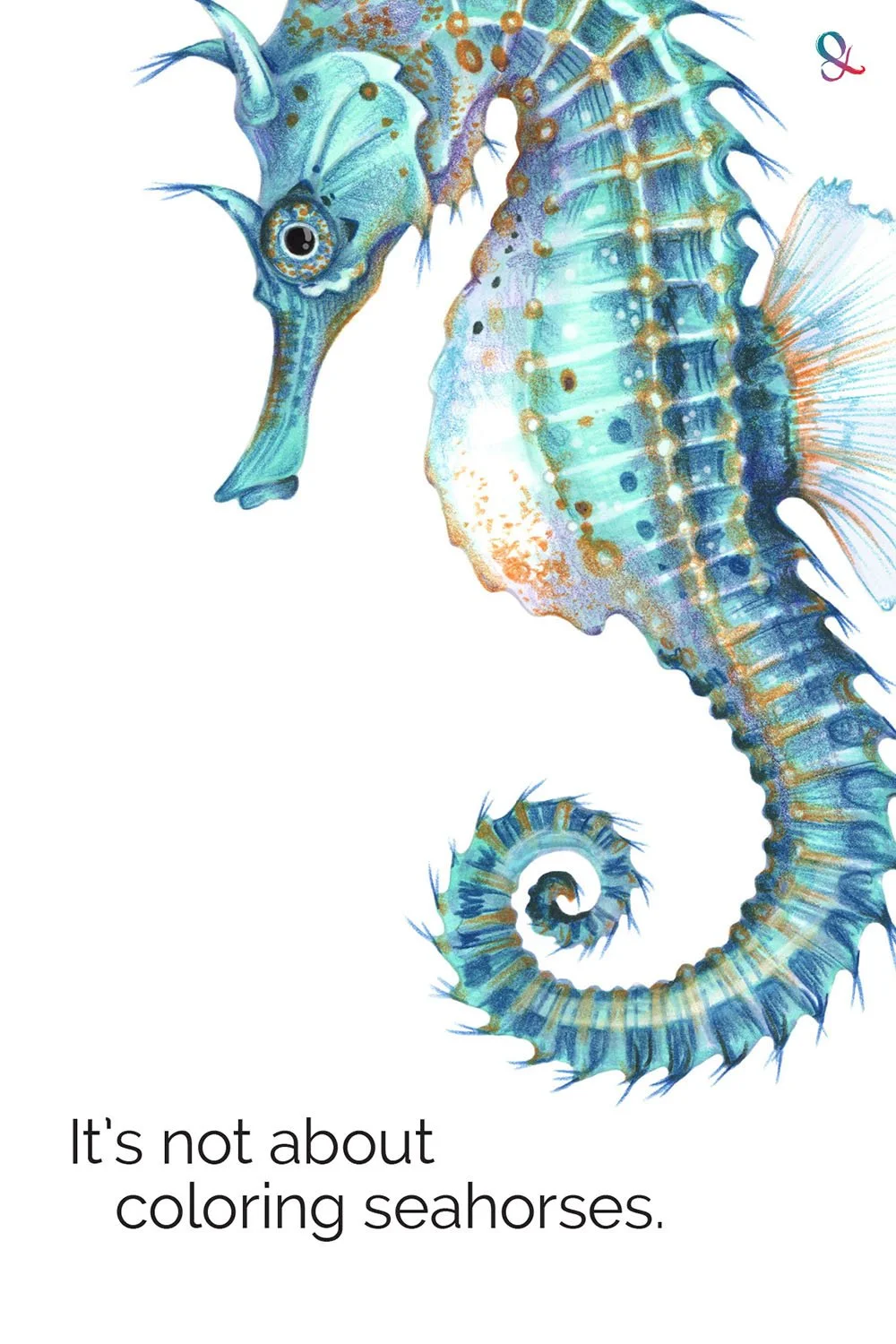
Choose the lesson, not the subject
Start looking for tutorials that teach the solution to a problem, not just how to color cute critters or gorgeous flowers.
“How to color a seahorse” may produce a lovely seahorse, but the better lesson is broader than that.
How do you make blue-green feel luminous?
How do you shade a faceted, translucent object?
How do you keep realistic texture from flattening the form?
“How to color a seahorse” handcuffs you to a seahorse.
Broader lessons create artistic flexibility.
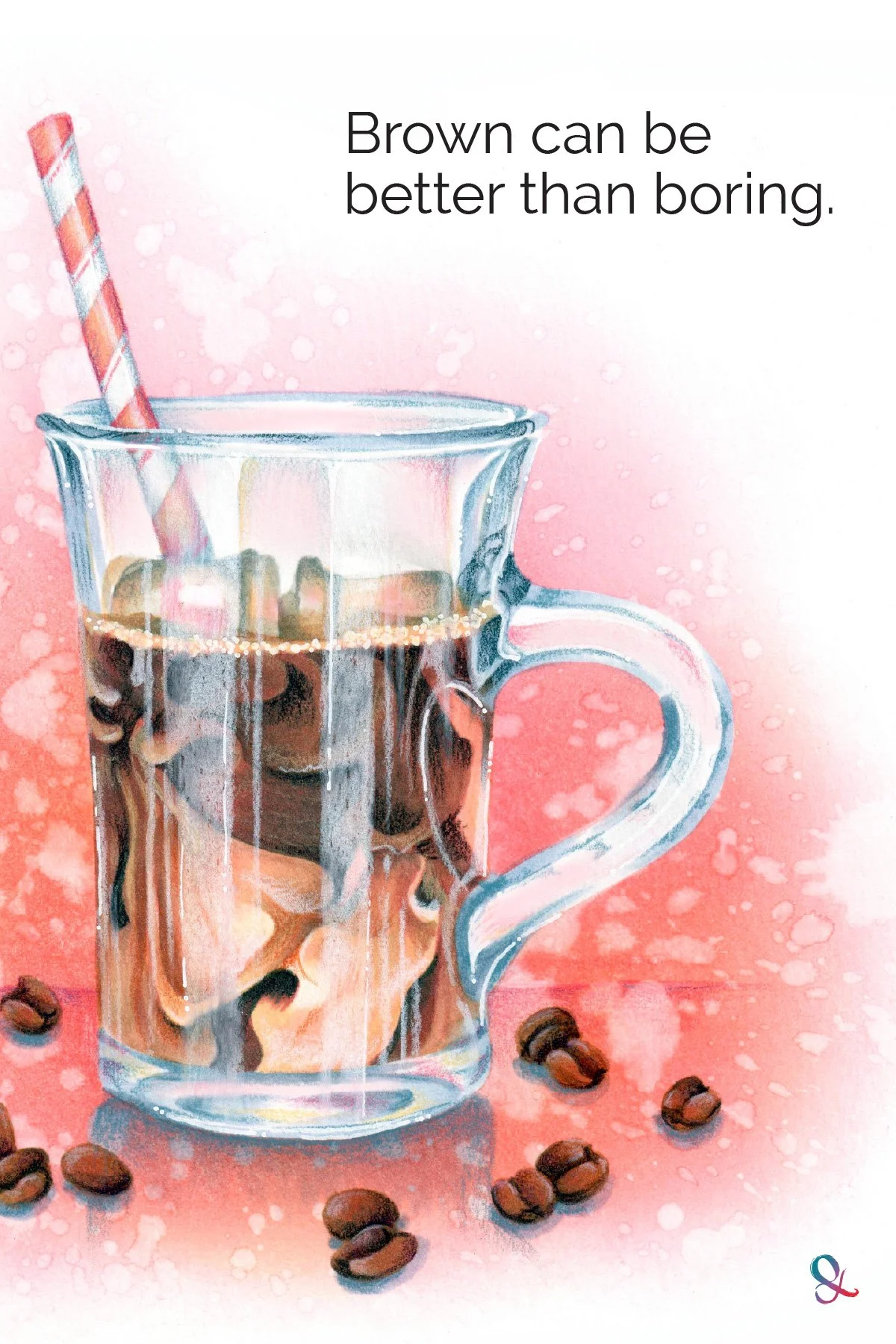
Color a seahorse, but use the same approach for sea glass, water, gemstones, or those beachy curaçao umbrella drinks that make your head spin.
Choose tutorials for the problem they resolve, not the picture they finish.
The title may still say “how to color a seahorse” because search engines are not known for their artistic subtlety. But inside the lesson, a good instructor should help you see something bigger than seahorse.
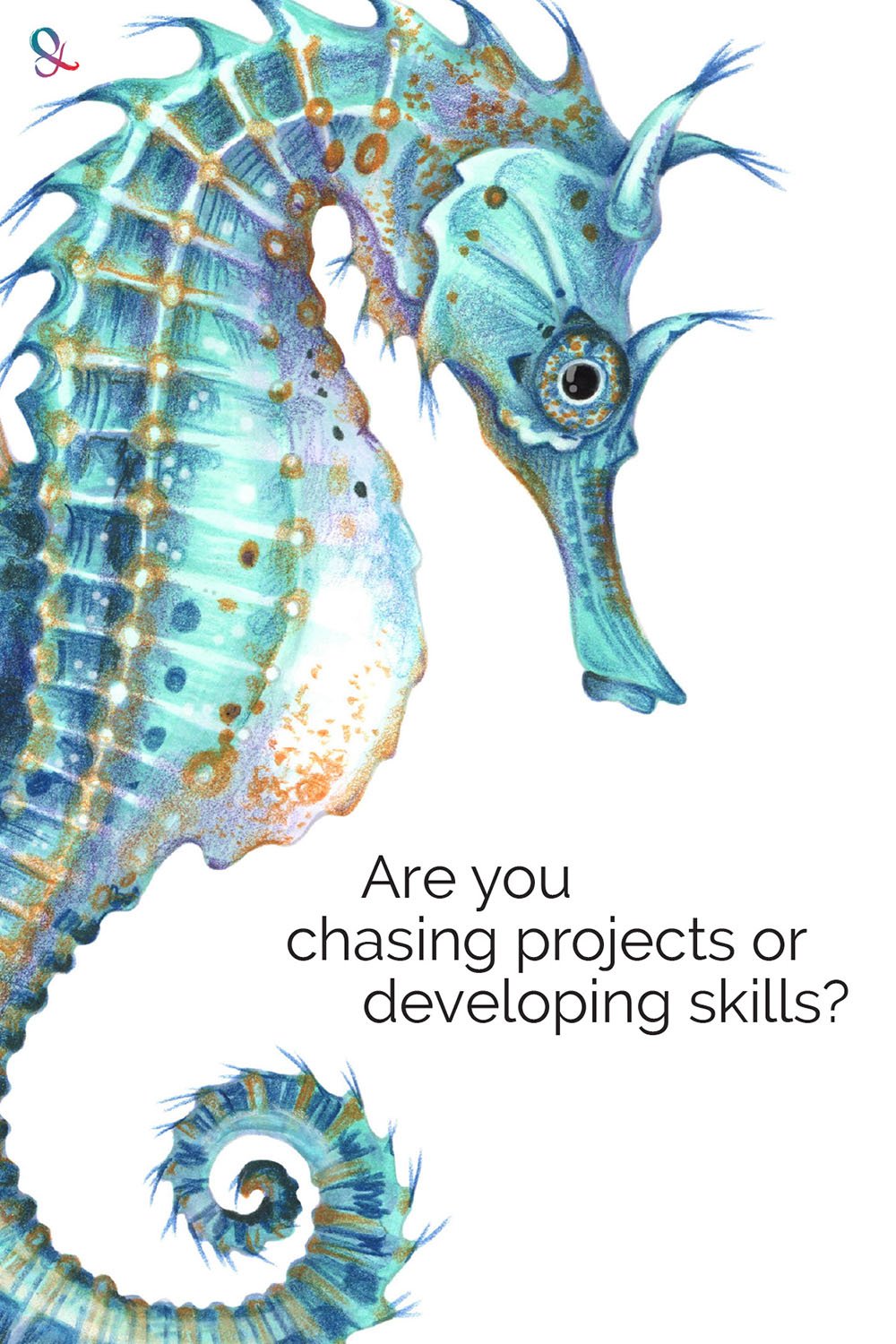
Better instruction begins with better searching
The tutorials that get clicked are the tutorials that get made again.
When colorists chase every cute subject and trendy effect, the internet answers with more cute subjects and trendy effects.
More dancing elephants. More sparkle tricks. More “do this exact thing in this exact spot” lessons.
Popular tutorials are not bad. But the market rewards what we ask for, and right now, we’re asking for results instead of knowledge.
If more colorists searched for better instruction, better instruction would be easier to find.
Look for teachers who explain why the shadow goes there, why the color shifts murkier, why the texture needs to follow the form, and why the darkest values matter more than highlights.
This is where real artistic growth begins.
Not with a trend. Not with a shortcut.
With a teacher who helps you understand the why rather than copying the how.
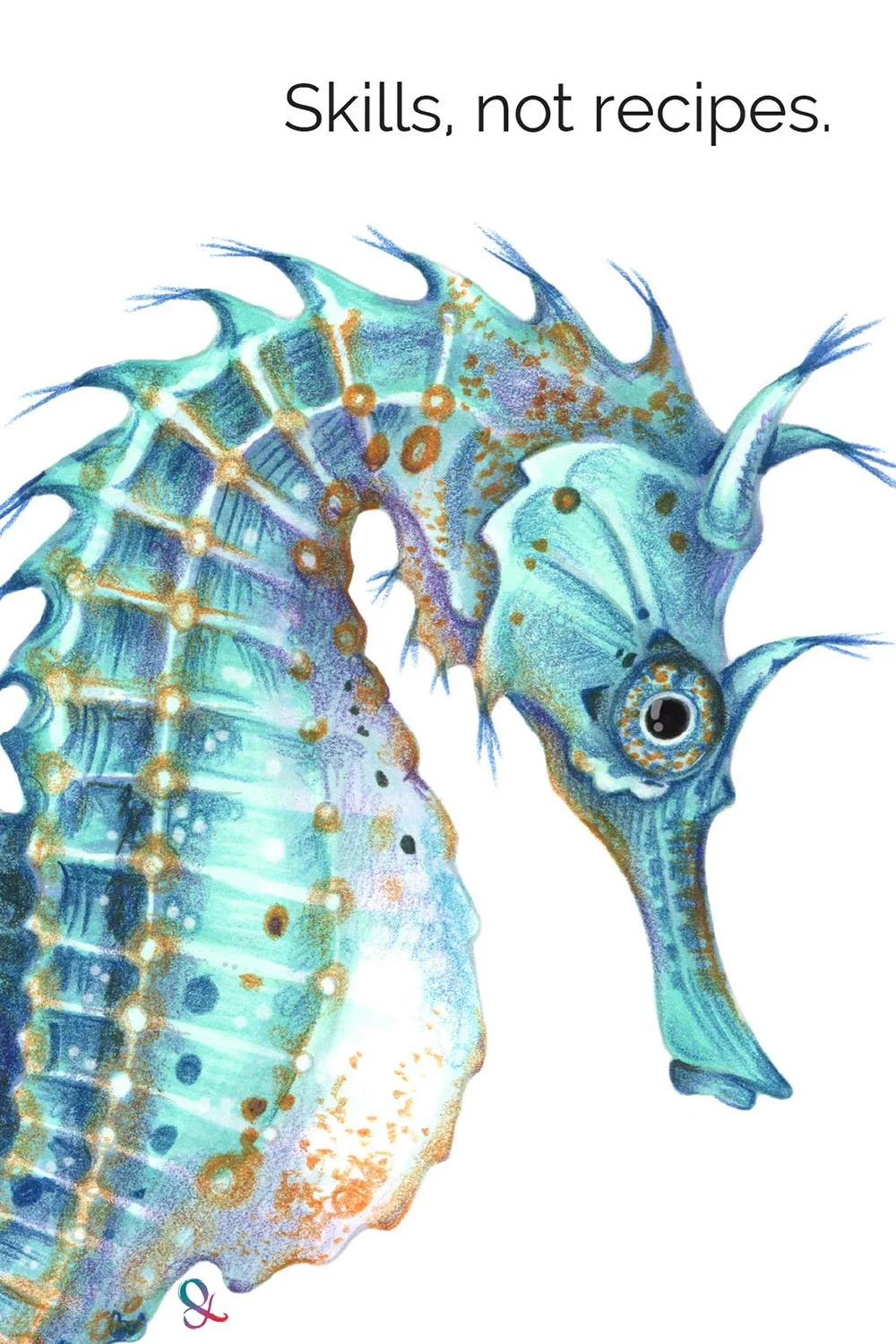
Today’s article is permission to stop collecting step-by-steps.
You don’t need a separate tutorial for every flower, animal, sparkle effect, or shiny object.
Artists do not grow by memorizing a thousand tiny recipes.
They grow by learning the broader concepts hiding behind specific projects.
That’s the kind of thinking we build in Color Wonk— building a personal library of skills rather than recipes.
Realistic coloring is not about finding the perfect steps for every subject.
It’s about learning enough from each lesson that the next project feels less like starting over.
Ready to Go Deeper?
Realistic coloring gets easier when you stop chasing recipes and start understanding artistic decisions.
If this article sparked a new way of seeing, here are a few places to continue exploring:
Learn Artistic Realism
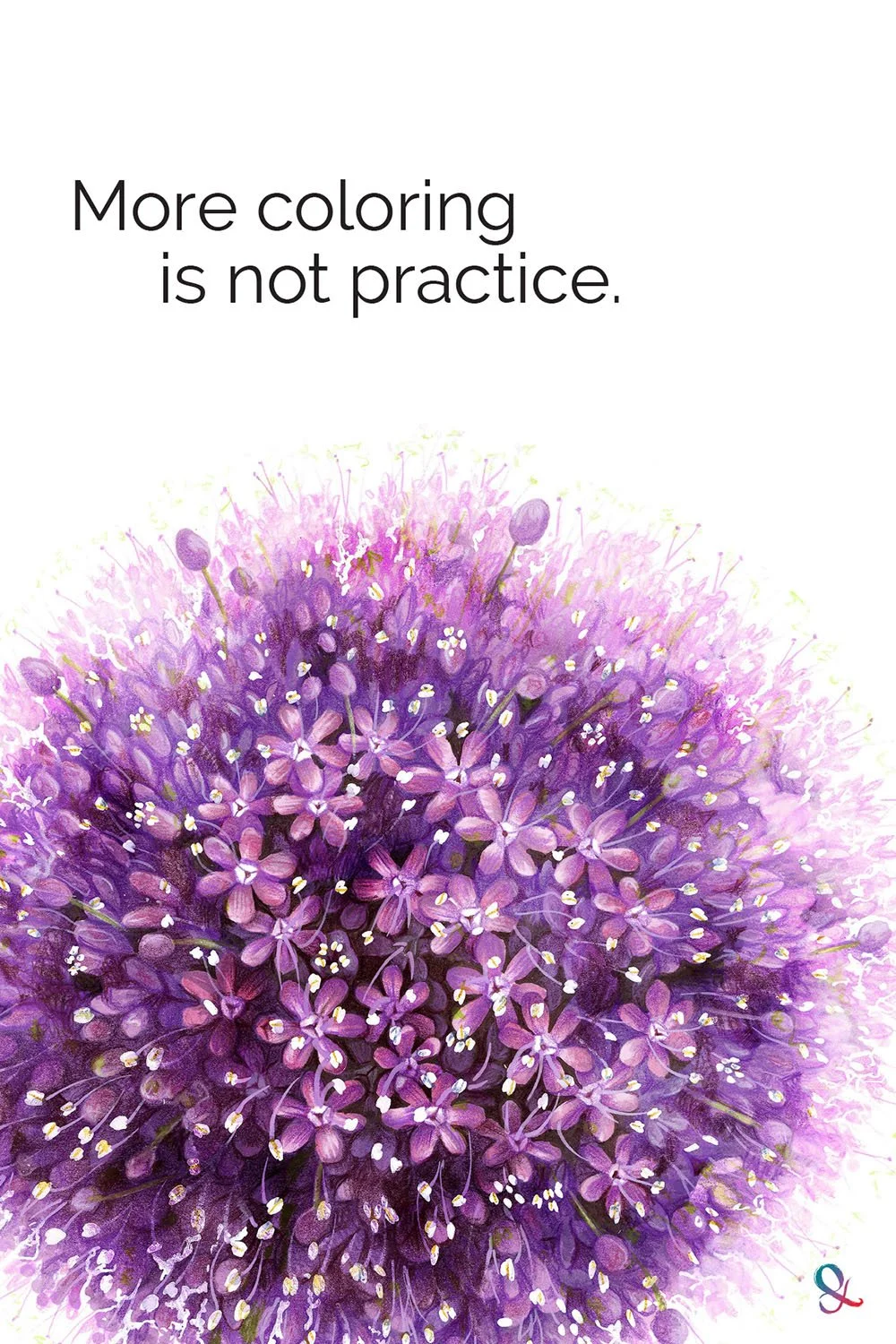
Guided Workshops
Build Basic Skills
RELATED ARTICLES: